دليل
Custom software or off-the-shelf? When a business in Bangladesh should build its own
Off-the-shelf software is cheaper until your process does not fit it. How to tell which side you are on, with examples from a school and a distributor.
بقلم Injamam Ahmed4 دقائق قراءة
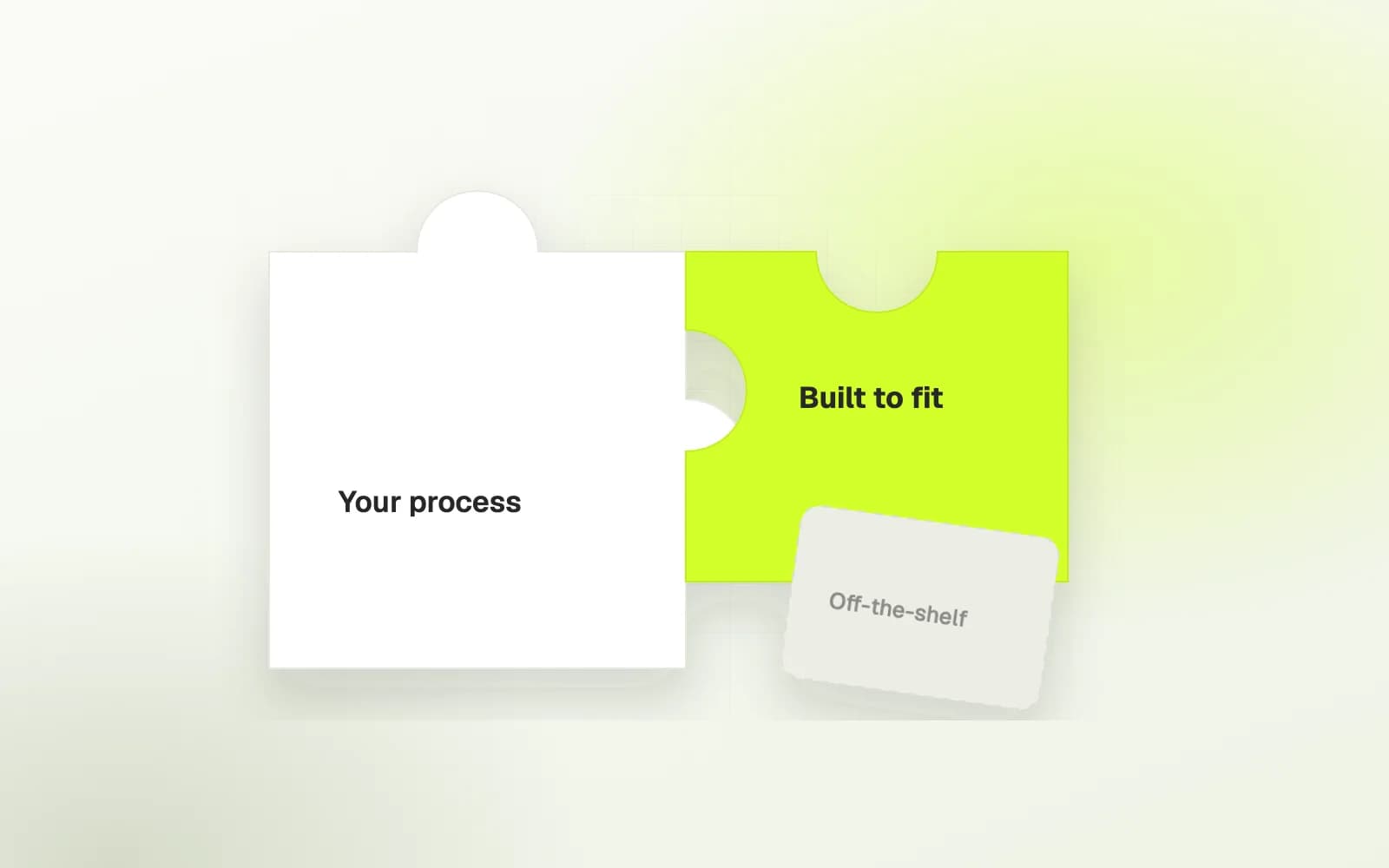
Every business in Bangladesh that outgrows Excel faces the same choice: buy software someone else built, or have custom software developed for the way you work. Software vendors will tell you to buy. Development agencies, us included, have a reason to tell you to build. This guide tries to be honest about when each one is right.
The short version: buy when your process is ordinary, build when your process is the thing that makes you money, and never build what a ready-made tool already does well.
What off-the-shelf software is good at
Accounting, payroll, email, chat, video calls, basic invoicing: these problems are the same in almost every business, and good tools for them already exist. They are cheaper than anything you could build, they are maintained by someone else, and they improve without you paying for it.
If a ready-made tool does 90% of what you need and the missing 10% is a preference rather than a requirement, buy it and adapt your process. That is the cheapest decision you will ever make.
Where off-the-shelf starts to hurt
Ready-made software is designed for the average customer. The pain starts when your business is not average in the ways that matter:
- Your payments are local. Fees, dues and orders paid by bKash, Nagad, bank transfer and cash, often in parts. Many international tools treat this as an afterthought.
- Your people work in the field. Sales reps in shops, collectors at doors, staff with patchy mobile data. A desktop tool with a mobile website is not the same as an app built for that day.
- Your language is Bangla. Not just the interface, but invoices, notices and messages your customers actually read.
- Your process is your advantage. The way you take orders, price for dealers or run admissions is the reason customers choose you. Bending it to fit a generic tool gives that away.
When two or more of those are true, the workarounds start: exports to Excel, a second tool for the field, a WhatsApp group to fill the gaps. Each workaround is cheap. Together they are the process.
Two examples from our own work
An online school's month
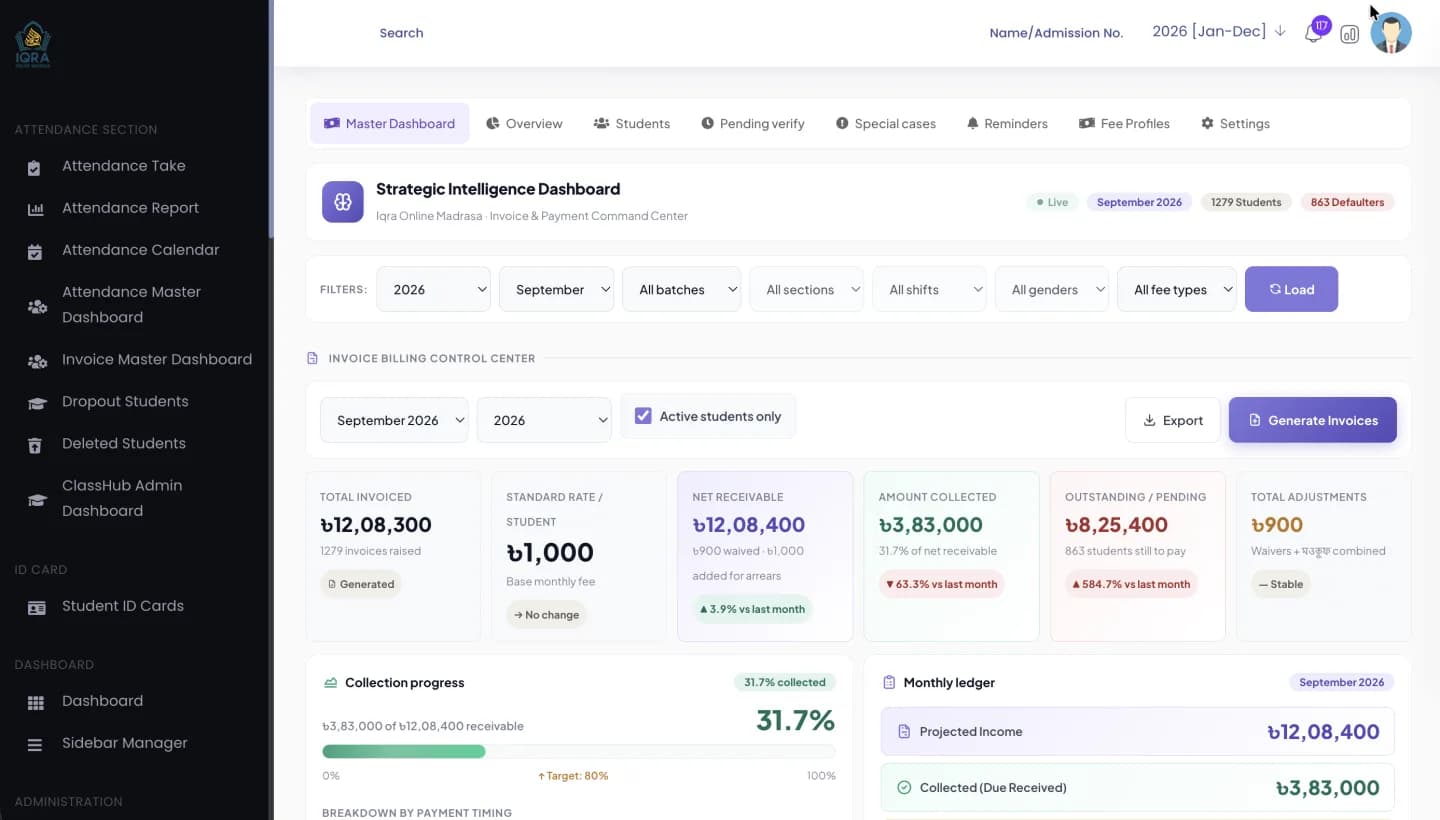
Iqra Online Madrasa teaches adult learners across Bangladesh, with around 1,300 students studying now. Every month the office had the same jobs: raise an invoice for every student, mark attendance for live classes, and chase unpaid fees, which were reconciled by hand at the end of the month.
A generic school or invoicing tool could do some of each job. None did them the way the office actually worked. We built a web panel and a Bengali Android app: a month of invoices goes out in one pass, filtered by batch, section, shift or fee type, and students pay through bKash inside the app.
A distributor's order book
For a national FMCG distributor, orders were written on paper in the shop and keyed in later. We built an order management system with an admin panel and a native Android app reps use in the shop: pick the retailer, build the order, see stock and price on the spot. We wrote about that change in from paper order books to live orders.
In both cases the deciding factor was the same. The process was specific to the business and done every day by many people. That is where custom software pays for itself.
The questions that decide it
Answer these honestly before you talk to anyone selling either option:
- How many people will use it every day? The more daily users, the more each minute saved is worth.
- How often does the process change? If it changes every quarter, you need software you control.
- What does the current workaround cost? Count hours spent re-typing, reconciling and chasing, and the money lost to mistakes.
- Is there a ready-made tool that already fits? Try it for a month before you commission anything.
- Who will own and maintain it? Custom software needs a team behind it, yours or an agency's.
What custom software actually costs
The build is the visible cost. The less visible ones are hosting, security updates, small changes as the business changes, and support when something breaks. A fair agency puts all of that in front of you before you start.
The way to keep the cost sensible is to build in stages. Start with the one job that wastes the most time or money, put it in front of real users quickly, and grow from there. We put a working prototype in front of clients within 72 hours for exactly this reason: it shows early whether the idea fits the work.
A middle path
You rarely have to choose all or nothing. Many businesses keep a ready-made accounting tool and build a custom system for orders, fees or field work, with an export between them. Build the part that is yours; buy the parts that are everyone's.
Questions we get asked
Is custom software only for large companies?
No. Some of the systems we run in production serve a single school or a single distributor. What matters is how often the process runs and how much the workaround costs, not the size of the company.
Can custom software grow with the business?
That is one of its main advantages, as long as it is built with growth in mind. Ask how the data is structured and how new features are added before you start.
What if the agency that built it disappears?
Make sure you own the code and the hosting, and that the system uses common, well-documented technology. Then another team can pick it up.
If you are weighing the two, tell us what your team does every day and where it hurts. We will say honestly whether a ready-made tool would do. See how we approach custom software development in Dhaka.